


Why Your Industrial Maintenance Team Needs Digital Skills (And How to Find Them)

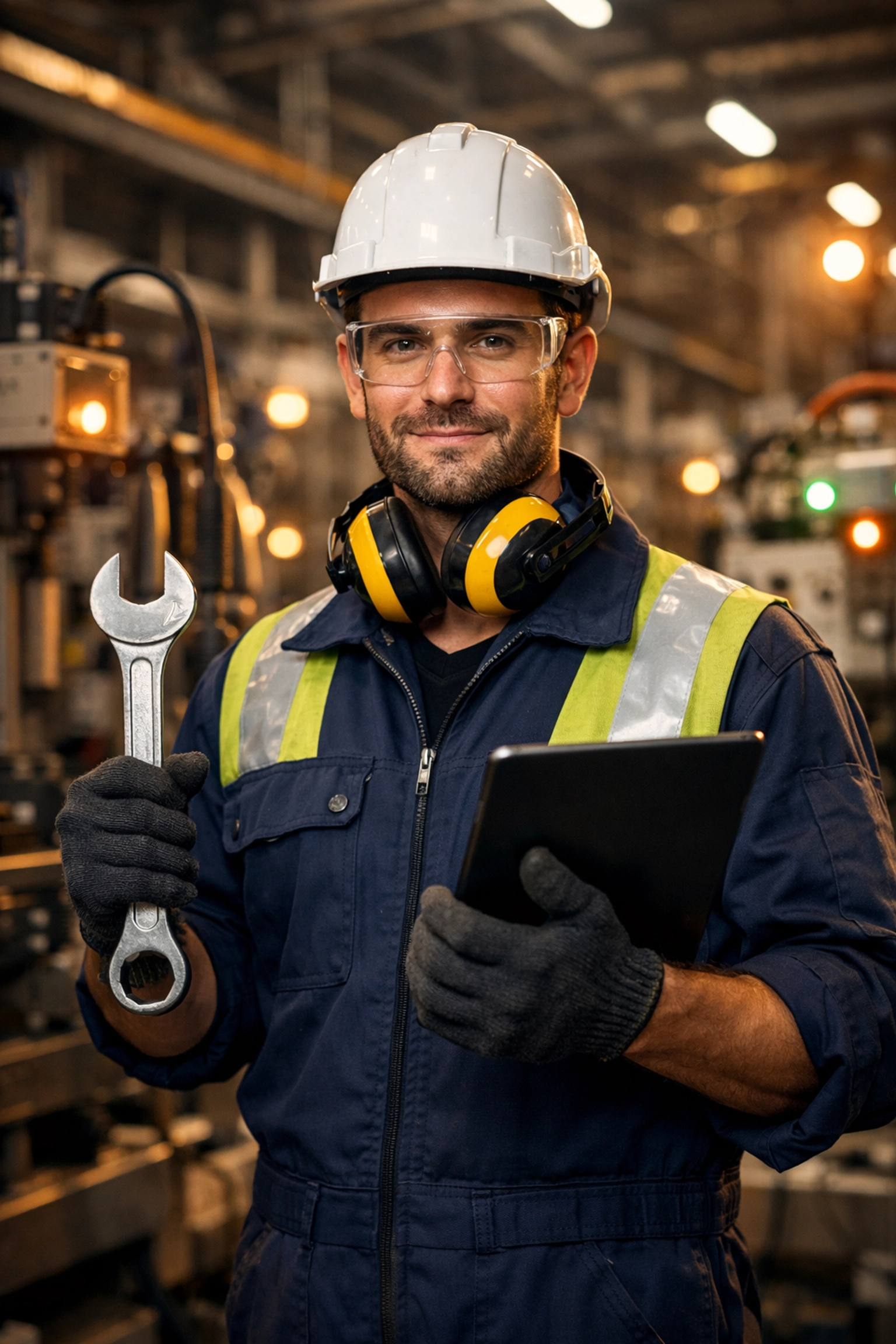
Your best maintenance tech just spent three hours staring at a PLC screen, trying to troubleshoot a conveyor system that's throwing errors he's never seen before. He can rebuild a gearbox blindfolded, but the digital diagnostic interface? That's a different story.
Welcome to Maintenance 4.0, where a wrench and a work ethic aren't enough anymore.
The Digital Shift Nobody Saw Coming (But Everyone Should Have)
Industrial maintenance used to be straightforward. Something broke, you fixed it. Preventive maintenance meant checking oil levels and listening for weird noises. The most advanced tool in your kit was probably a multimeter.
Not anymore.
Today's manufacturing plants, mining operations, and oil and gas facilities are packed with sensors, connected equipment, and predictive analytics platforms that generate more data in a day than your maintenance team used to see in a year. And if your techs can't navigate both the grease and the glass: the physical machinery AND the digital systems: you're bleeding money through unplanned downtime.
What Exactly Is Maintenance 4.0?
Maintenance 4.0 is the evolution of industrial maintenance that mirrors Industry 4.0: the fourth industrial revolution built on automation, data exchange, and smart manufacturing. In practical terms, it means:
Predictive Maintenance: Using AI and machine learning to predict equipment failures before they happen, based on vibration data, temperature readings, and performance trends.
IIoT (Industrial Internet of Things): Every piece of equipment is connected, talking to each other and to centralized monitoring systems. Your compressor isn't just running: it's transmitting real-time health data.
Cloud-Based Platforms: Maintenance management systems that techs access from tablets or smartphones, anywhere on the facility floor (or remotely).
Digital Twin Technology: Virtual replicas of physical equipment that allow techs to simulate problems and solutions before touching the actual machinery.
The catch? All of this requires a workforce that understands both mechanical systems and digital interfaces. And that's where most companies hit a wall.
Why Your Team Can't Afford to Skip Digital Skills
Downtime Costs Are Brutal
Unplanned downtime in manufacturing costs an average of $260,000 per hour, according to industry estimates. In mining and oil and gas operations, those numbers can skyrocket even higher. When a critical system fails and your maintenance team can't interpret the diagnostic data quickly, every minute counts.
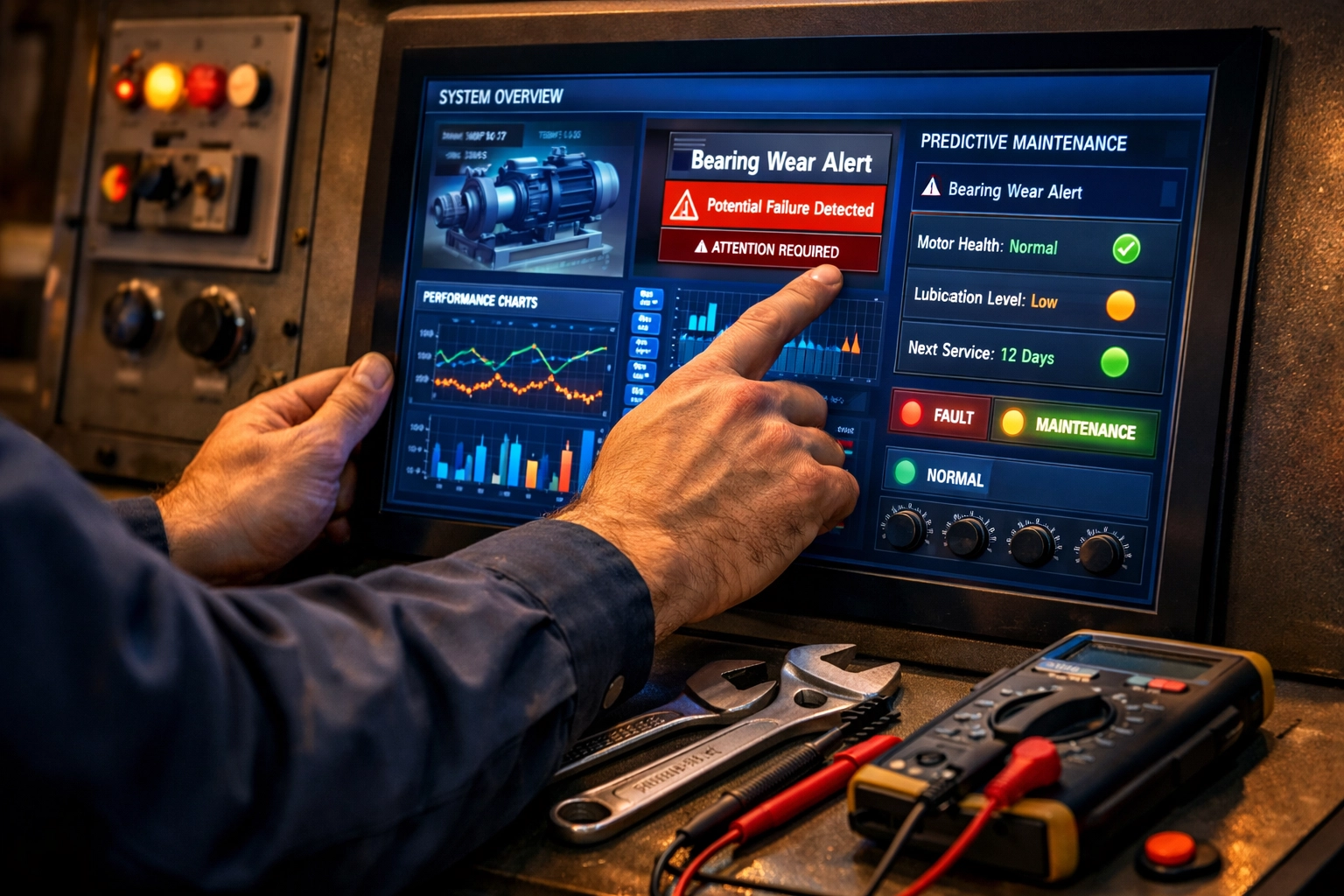
Predictive maintenance systems can reduce downtime by 30-50% and extend equipment life by 20-40%: but only if your techs know how to use them. A sensor that detects bearing wear at 3 AM doesn't help if nobody on your team can access the alert, understand the severity, or schedule the intervention before failure.
Equipment Is Smarter Than Ever
Modern industrial equipment comes with programmable logic controllers (PLCs), human-machine interfaces (HMIs), and embedded software that requires constant updating and troubleshooting. Your hydraulic press isn't just mechanical anymore: it's a computer system wrapped in steel.
Traditional mechanical skills can't solve software glitches, network connectivity issues, or firmware updates. When a production line stops because of a coding error in the PLC, you need a tech who can diagnose digital problems as confidently as they diagnose bearing failures.
Cybersecurity Is Now a Maintenance Issue
This one surprises people, but it's critical: Connected equipment creates cybersecurity vulnerabilities. In 2026, industrial facilities are increasingly targeted by ransomware and cyberattacks that shut down operations. Maintenance teams are often the first line of defense because they're the ones accessing these systems daily.
Your techs need to understand basic cybersecurity protocols: secure passwords, recognizing phishing attempts, and following proper network access procedures. It's not IT's problem anymore; it's everyone's problem.
The Skills Gap Is Real (and Growing)
Here's the uncomfortable truth: The gap between what maintenance teams need to know and what they currently know is widening fast.
Around 70% of Fortune 500 companies have established mentorship programs specifically to enhance digital skills, which tells you everything about how widespread this problem is. But smaller manufacturers, mining operations, and regional oil and gas facilities? They're often left scrambling.
The problem isn't just training existing staff: it's finding new talent that already has this hybrid skill set. Traditional maintenance technicians learned their trade through hands-on experience, apprenticeships, and certifications focused purely on mechanical, electrical, and hydraulic systems. Digital fluency wasn't part of the curriculum.
Now you need people who can:
Interpret data analytics dashboards
Navigate cloud-based CMMS (Computerized Maintenance Management Systems)
Troubleshoot IoT sensor networks
Work with AI-powered predictive tools
Understand basic programming for PLCs
Communicate with engineering teams about software integration
Finding someone who checks all those boxes? That's where specialized recruiting comes in.
How to Actually Find These Hybrid Unicorns
Start With a Realistic Skills Assessment
Before you can find the right people, you need to know exactly what digital skills your operation requires. Not every facility needs the same level of digital sophistication. A small manufacturing plant might just need techs comfortable with basic CMMS software and mobile work orders. A large-scale mining operation might need advanced data analytics and IIoT troubleshooting.
Map out your current systems and identify the specific digital competencies required to maintain them. This becomes your recruiting roadmap.
Look Beyond Traditional Channels
The best hybrid maintenance techs aren't always hanging out on Indeed or LinkedIn. They're working in industries where digital skills are already mandatory: automation companies, advanced manufacturing facilities, or tech-driven operations.
This is exactly why companies turn to a specialized Industrial Recruiter or Manufacturing Recruiter who understands these niche skill sets. Generalist recruiters might find you a great mechanic or a great IT person, but finding someone who bridges both worlds? That requires industry-specific networks and knowledge.
Partner With Recruiters Who Speak Your Language
A Mining Recruiter worth their salt knows the difference between someone who can fix a haul truck and someone who can fix a haul truck and troubleshoot its telematics system. An Oil and Gas Recruiter who specializes in technical roles understands that offshore platform maintenance now requires digital skills that didn't exist five years ago.
At Insight Staffing Group, we've built our entire recruiting model around finding these hybrid workers: the techs who understand both the mechanical fundamentals and the digital tools that modern facilities demand. We're not just matching resumes to job descriptions. We're identifying people who can walk onto your facility floor and handle whatever Maintenance 4.0 throws at them.
We dig into your specific operational needs, the equipment you run, and the digital systems you use. Then we tap into networks of candidates who've already proven they can bridge that traditional-digital gap. Because here's the thing: These people exist. They're just not easy to find if you're using the same old recruiting playbook.
Invest in Training for Current Staff
Hiring externally isn't your only option. If you have solid mechanical technicians who are willing to learn, investing in digital skills training can be incredibly cost-effective. Look for programs that cover:
Industrial data analytics fundamentals
CMMS and EAM (Enterprise Asset Management) software
Basic PLC programming
IoT sensor technology
Predictive maintenance tools
The key is making training ongoing, not a one-time event. Technology evolves constantly, and your team needs to evolve with it.
The Bottom Line
Your industrial maintenance team is the backbone of your operation. When equipment runs smoothly, production flows, costs stay predictable, and nobody's getting emergency calls at 2 AM. But in 2026, keeping things running requires more than strong hands and mechanical know-how.
Digital skills aren't a nice-to-have anymore: they're table stakes. Predictive maintenance, IIoT connectivity, and cloud-based systems aren't future trends; they're already here, keeping your competitors ahead while you're still trying to figure out why your sensors aren't talking to your CMMS.
Finding maintenance techs who can handle both the wrench and the tablet isn't easy. But it's not impossible, either: especially when you work with a Recruiter who actually understands the industrial landscape and knows where to find these hybrid professionals.
At Insight Staffing Group, we specialize in connecting heavy industrial operations with the exact talent they need, whether it's for manufacturing, mining, or oil and gas facilities. We get it because we've been doing it: sourcing the people who can keep your operation running in the age of Maintenance 4.0.
Need to upgrade your maintenance team with digital-savvy talent? Let's talk. Because downtime doesn't wait, and neither should you.
Comments