


From the Shop Floor to the C-Suite: 5 Skills Every Manufacturing Leader Needs to Master in 2026

Let's be real: manufacturing in 2026 isn't just about cranking out widgets anymore. The game has completely changed. Between tariff whiplash, the reshoring boom, and AI practically rewriting the playbook every quarter, today's manufacturing leaders need a toolkit that would've seemed borderline sci-fi a decade ago.
Gone are the days when you could climb the ladder from shop floor supervisor to plant manager by simply knowing the machinery inside and out. Don't get me wrong, that technical grit still matters. But now? You need to speak fluent data analytics, navigate geopolitical chess moves, and somehow keep your team motivated while robots take over half the production line.
If you're a manufacturing leader (or aspiring to be one), here are the five critical skills you absolutely need to master to stay relevant, and competitive, in 2026.
Skill 1: Digital Fluency (Bridging the IT/OT Divide)
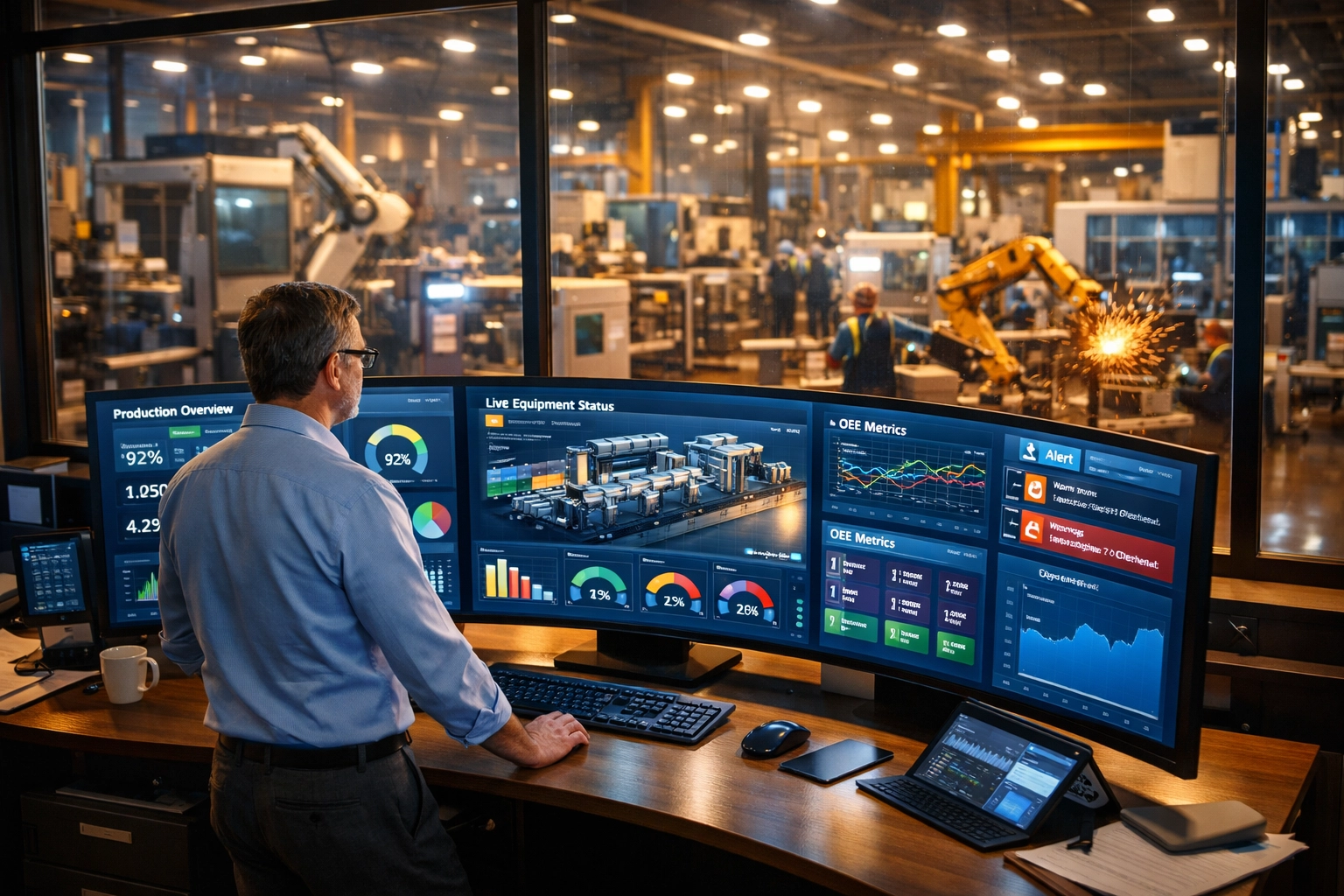
Remember when "the IT guys" were a separate species who lived in a different building? Yeah, those days are over. In 2026, manufacturing leaders need to understand data signals just as well as they understand production lines.
Here's what digital fluency actually means on the ground:
Reading the room, digitally: You don't need to code Python (unless you want to), but you do need to understand what your IoT sensors are telling you about machine health, predictive maintenance windows, and production bottlenecks.
Talking shop with the tech team: When your IT department says "We need to integrate the ERP with the MES through an API," you should at least know what problem they're solving, not just nod and hope for the best.
Data-driven decisions over gut calls: Intuition still has its place, but backing it up with real-time analytics is the difference between being right and being lucky.
The IT/OT (Information Technology/Operational Technology) divide used to be a chasm. Now it's more like a blurry line that successful leaders straddle daily. You're essentially a translator between the factory floor crew who knows how things actually work and the data scientists who see patterns in spreadsheets.
Bottom line? If you can't interpret a dashboard showing throughput rates, energy consumption, and quality metrics all at once, you're flying blind in 2026.
Skill 2: Human-Centric Soft Skills (The EQ Advantage)
Here's the ironic twist: as AI and automation take over more tasks, the human element becomes your biggest competitive advantage. Machines can optimize production schedules, but they can't (yet) inspire a demoralized third shift or mediate a turf war between departments.
Emotional intelligence isn't just a buzzword, it's the secret weapon that separates good leaders from great ones:
Empathy in an era of change: When you're asking veteran machinists to embrace new technology that might eliminate parts of their job, empathy isn't optional. You need to genuinely understand their fears and help them see a path forward.
Building psychological safety: Teams that feel safe taking risks and admitting mistakes are the ones that innovate. Fear-based management kills creativity faster than anything.
Cross-generational communication: You've got Baby Boomers who've been running the same equipment for 30 years working alongside Gen Z kids who expect everything to have a touchscreen. Bridging that gap requires serious people skills.
The research backs this up: people-centric leadership that cultivates learning cultures and fosters collaboration is what keeps top talent from walking out the door. And in a tight labor market? Retention is everything.
Skill 3: Supply Chain Agility (Welcome to the Tariff Olympics)
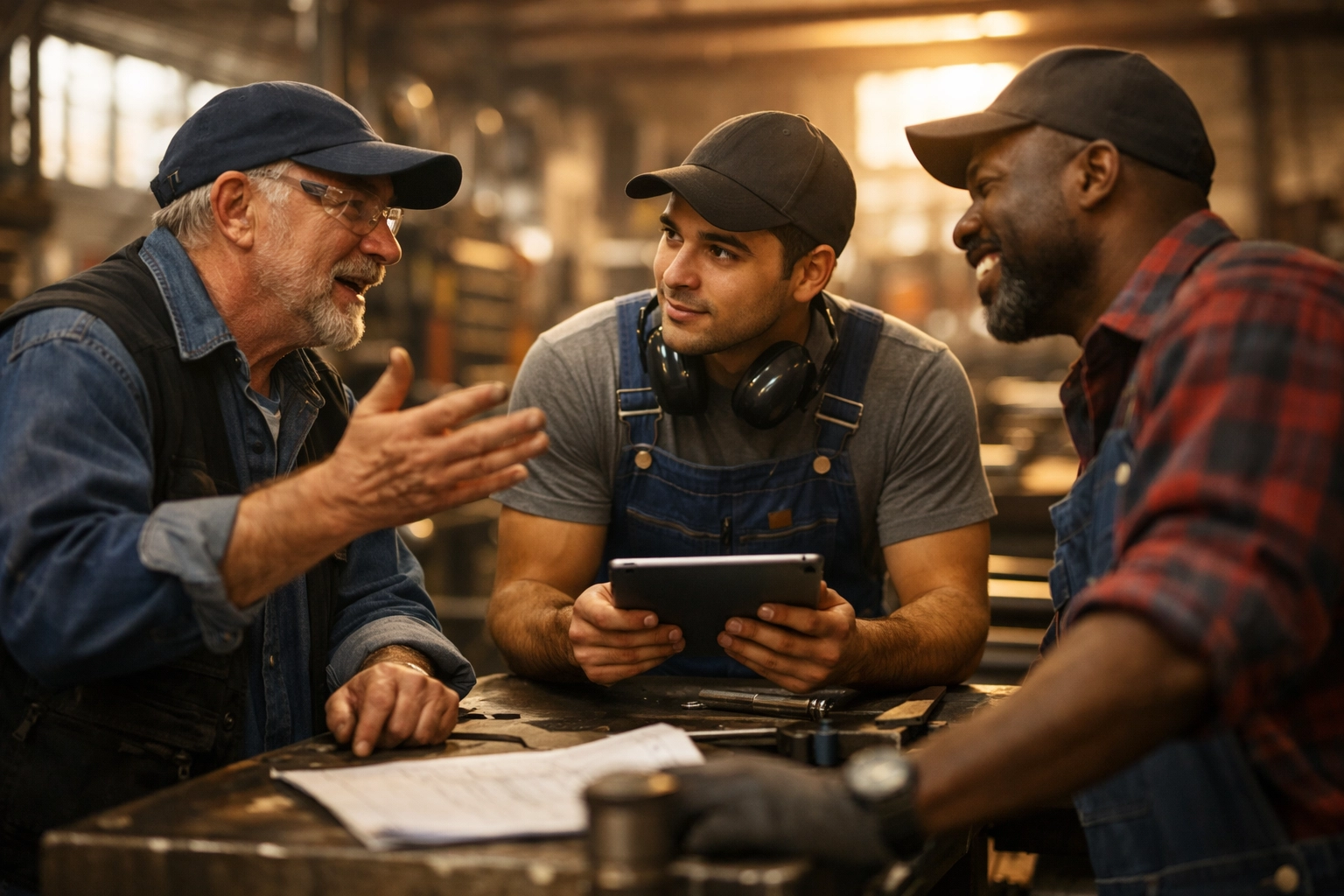
If you thought supply chain chaos was a 2020-2022 thing, buckle up. The 2025/2026 landscape is like playing chess while someone keeps changing the rules mid-game.
Between shifting tariff policies, reshoring initiatives, and geopolitical tensions that can disrupt your component supply overnight, supply chain agility isn't just strategic, it's survival:
Scenario planning on steroids: You need Plan A, Plan B, and probably Plans C through F. What happens if your primary steel supplier gets hit with a 25% tariff tomorrow? Do you have alternatives lined up?
Nearshoring and friend-shoring: The old "cheapest bid wins" approach is dead. Now you're balancing cost, reliability, and geopolitical risk. Can you source locally? From a trade-friendly nation? These questions matter more than ever.
End-to-end visibility: You can't manage what you can't see. Leaders who understand the entire supply chain, from raw material extraction to final delivery, can spot vulnerabilities before they become crises.
The manufacturers winning in 2026 aren't necessarily the ones with the lowest costs. They're the ones who can pivot fast when the landscape shifts. And trust me, it's shifting constantly.
Skill 4: Change Management (Death to "Command and Control")
The old-school manufacturing leadership style went something like this: "I'm the boss, I know best, do what I say." Spoiler alert: that doesn't work anymore.
Modern manufacturing requires a culture of continuous innovation, which means your team needs to feel empowered to suggest improvements, experiment, and yes, occasionally fail:
From dictator to coach: Great leaders in 2026 ask more questions than they give orders. "What do you think would work better?" beats "Here's what we're doing" every single time.
Embracing failure (strategically): If your team is terrified of making mistakes, they'll never try anything new. The goal is to "fail fast": test ideas quickly, learn from what doesn't work, and iterate rapidly.
Transparent communication: When you're rolling out new technology or restructuring operations, secrecy breeds anxiety. Overcommunicate the "why" behind changes and address the WIIFM (What's In It For Me) for every stakeholder.
Change management is essentially the art of getting people excited about something they were initially skeptical of. It takes patience, clear communication, and the ability to build trust over time. No shortcuts here.
Skill 5: Sustainability & ESG (Beyond the Buzzword)

Let's cut through the noise: sustainability in manufacturing isn't just about feeling good or checking a PR box anymore. In 2026, it's a core operational metric that affects everything from your cost structure to your ability to win contracts.
Here's why sustainability matters to manufacturing leaders right now:
Customer requirements: Major buyers (especially in automotive, aerospace, and consumer goods) increasingly require suppliers to meet specific ESG (Environmental, Social, Governance) standards. No compliance? No contract.
Cost savings: Energy efficiency, waste reduction, and circular economy principles directly impact your bottom line. Leaders who treat sustainability as a cost center are missing the point.
Talent attraction: Younger workers: the ones you desperately need to replace your retiring workforce: care about working for companies with strong environmental and social commitments. It's not optional if you want to recruit the best.
Regulatory pressure: Whether it's carbon reporting requirements or upcoming environmental regulations, staying ahead of the curve beats scrambling to catch up.
Sustainability leadership means understanding lifecycle analysis, circular manufacturing principles, and how to balance short-term costs with long-term value. It's complex, it's evolving, and it's absolutely essential.
The Talent Challenge: Finding Leaders Who Can Do It All
Here's the uncomfortable truth: leaders who genuinely excel at all five of these skills are incredibly rare. You need someone who can read a P&L statement and interpret machine learning outputs, who has the technical credibility to command respect on the shop floor but also the executive polish to present to the board, who understands both Six Sigma methodologies and stakeholder empathy.
That's a unicorn-level candidate.
This is exactly why working with a specialized Manufacturing Recruiter or Industrial Recruiter has become essential rather than optional. Generic recruiting agencies might be able to fill entry-level positions or even some mid-level roles, but when you're looking for that rare "hybrid" leader who bridges technical expertise and strategic vision? You need a recruiter who actually understands the manufacturing landscape.
At Insight Staffing Group, we specialize in finding these needle-in-a-haystack candidates: the leaders who've been battle-tested on actual factory floors but also have the forward-thinking mindset to lead through technological transformation. We know the difference between someone who talks a good game and someone who's actually managed a plant through an ERP implementation or led a team through a major sustainability initiative.
The manufacturing leaders who will thrive in 2026 and beyond aren't just technically competent: they're strategic, emotionally intelligent, adaptable, and purpose-driven. Finding them takes more than posting on LinkedIn and hoping for the best.
It takes a recruiter who knows exactly what to look for and where to find it.
Comments